top of page

Stick Insects

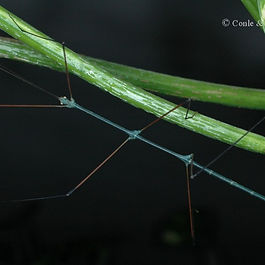
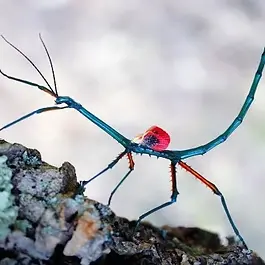
Stick insects are masters of disguise. With bodies shaped like twigs, branches, or leaves, they rely on camouflage as their primary defence. Remaining perfectly still for long periods, they blend so naturally into their surroundings that predators often overlook them completely.

Belonging to the order Phasmatodea, stick insects are herbivores and feed mainly on leaves. Despite their sometimes impressive size, they are gentle and delicate creatures. Their long legs and slender bodies may look sturdy, but they are surprisingly fragile and must be handled with great care.

Many species have developed fascinating survival strategies. Some can gently sway to mimic the movement of branches in the wind. Others are capable of regenerating lost legs during early life stages. A few species can even reproduce through parthenogenesis, meaning females can produce offspring without a male.

Southeast Asia — mainly Malaysia, Thailand, and southern Myanmar.

Jungle Nymph

One of the heaviest stick insects, with large females and spiny legs used for defence.

Eastern Australia, mainly Queensland and New South Wales.

Giant Prickly Stick Insect

Mimics dried leaves and sways like foliage to avoid predators.

Southeast Asia — including Thailand, Malaysia, Indonesia, and surrounding regions.

Common Green Stick Insect

A thin, twig-like species often used in education due to its simple care.

Madagascar — endemic to the island.

Metallic Stick Insect

Females can reproduce without males through parthenogenesis.

Thailand, specifically recorded from Khao Yai National Park and surrounding forested regions.

Giant Budwing Stick Insect

A large, winged species capable of gliding short distances.

Southeast Asia and parts of Oceania — including Malaysia, Indonesia, Philippines, Papua New Guinea, and surrounding regions.

Leaf Insect

Perfect leaf mimicry including veins and bite marks.

Northern Peru, South America — a very limited and localized natural range.

Velvet Beauty

Also called Black Beauty; displays red wings when disturbed.

  • Youtube
  • Instagram
  • Facebook
  • TikTok

©2026 by Happy Bugs Zoo Ltd. 

bottom of page